
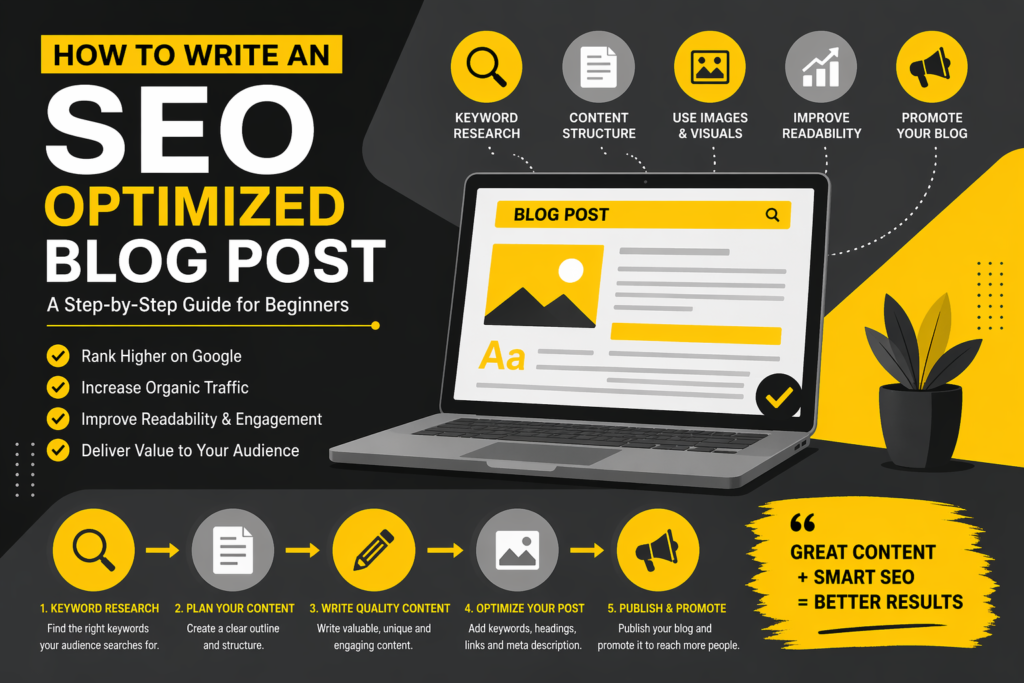
Writing a blog post is easy. But writing one that ranks on Google is different. Many beginners publish content but do not get traffic. The reason is simple. They ignore proper SEO writing and structure.
In this guide by ZenvySEO, you will learn how to write SEO blog post step by step. You will understand content optimization, search intent, and on-page SEO in a simple way. If you follow this guide, your website ranking and organic traffic will improve over time.
What is an SEO Optimized Blog Post?
An SEO optimized blog post is content written to rank on search engines. It is designed for both users and Google. It focuses on providing value while following proper SEO rules. This type of content uses the right keywords and structure. It helps improve visibility and attract more organic traffic.
Simple Definition of SEO Writing
SEO writing means creating content that is easy to read and optimized for search engines. It includes proper keyword placement, headings, and structure. It focuses on content quality and user value. When you write with purpose, your blog becomes useful and rankable.
Must read this how-to-find-low-competition-keywords-for-beginners
Why SEO Optimization is Important for Ranking
SEO Optimized Blog helps your content reach the right audience. It improves your SEO strategy and visibility.
It also supports:
- Better ranking factors
- Improved user experience
- Higher organic traffic
Without optimization, your blog may never appear in search results.
- What is an SEO Optimized Blog Post?
- Keyword Research for Blog Writing
- Creating a Perfect Blog Structure
- Writing High-Quality SEO Content
- On-Page SEO Optimization Techniques
- Optimizing Images and Media
- Improving Readability and User Experience
- Publishing and Promoting Your Blog Post
- Comparison Table of SEO Writing Elements
- Common SEO Mistakes to Avoid
- Conclusion
- Frequently Asked Questions (FAQs)
Keyword Research for Blog Writing
Keyword research is the backbone of SEO. Without it, your content lacks direction. It helps you understand what your audience is searching for. By targeting the right keywords, you can create relevant and valuable content. This process improves your chances of ranking on search engines. It also helps you attract consistent organic traffic to your website.
How to Find the Right Keywords
Start by understanding your niche. Use tools and Google suggestions.
You can search:
- “SEO optimized blog post”
- intitle:”SEO blog writing”
- inurl:seo-blog-post
These help you discover real search terms. This process improves your keyword placement and content focus.
Understanding Search Intent
Search intent means what the user wants.
There are three types:
- Informational
- Navigational
- Transactional
If your content matches intent, your website ranking improves.

Creating a Perfect Blog Structure
A clear structure makes your content easy to read. It helps readers understand your message quickly. Well-organized content improves readability and flow. It also keeps users engaged for a longer time. This increases the chances of better ranking on search engines.
Importance of H1, H2, and H3 Headings
Headings organize your content. They improve readability and SEO. Google uses headings to understand your blog structure. Proper use helps in ranking.
How to Organize Your Content Properly
Break content into sections. Use short paragraphs. Follow a logical flow. This improves user experience and keeps readers engaged.
Writing High-Quality SEO Content
Content is the heart of SEO. Without quality content, even the best strategies will not work. Your goal should be to provide value to the reader while following proper content optimization techniques.
Writing Engaging and User-Friendly Content
Focus on clarity and simplicity. Write in a way that even beginners can understand. Avoid complex sentences and unnecessary words. Use proven SEO content writing tips to make your content engaging. Add examples, explanations, and helpful information. Always write for humans first, then optimize for search engines.
Using Keywords Naturally in Content
Do not force keywords into your content. This can harm your content quality and readability. Instead, use them naturally within sentences.
You can include phrases like:
- writing SEO friendly articles
- SEO blog writing techniques
This approach improves content optimization while keeping your content smooth and easy to read.
On-Page SEO Optimization Techniques
On-page SEO helps your content become more visible in search engines. It ensures that your blog is properly optimized for both users and Google.
Optimizing Title, Meta Description, and URL
Your title is the first thing users see. Make it clear, attractive, and keyword-rich. A good title increases click-through rate.
Use LSI phrases like:
- how to optimize blog content for SEO
Keep your URL short, clean, and relevant to your topic. A well-optimized title and URL improve your overall SEO performance.
Internal Linking and External Linking Strategy
Use internal linking to connect your blog posts. This helps users explore more content on your site and improves navigation. Add external linking to trusted sources. This builds credibility and trust. A strong linking strategy improves SEO and enhances user experience.
Must read this best-free-traffic-sources-for-beginners
Optimizing Images and Media
Images make your content more attractive and engaging. They grab the reader’s attention quickly. Visuals help explain complex ideas in a simple way. They also improve user experience and readability. This keeps visitors on your page for a longer time.
Using Alt Text for Images
Always add alt text to your images. It helps search engines understand what the image is about. This improves your SEO and accessibility. Alt text also helps your images appear in Google Image search, which can bring extra traffic.
Image Compression and Speed Optimization
Large images can slow down your website. A slow site creates a poor user experience and affects ranking. Compress your images before uploading them. Fast-loading pages improve engagement and help your content rank better.
Improving Readability and User Experience
Good readability keeps users on your page for a longer time. It makes your content easy to understand. Simple language helps readers stay focused. This reduces bounce rate and improves engagement. As a result, yourSEO Optimized Blog performance gets better.
Using Short Paragraphs and Simple Language
Short paragraphs are easier to read. They make your content clean and user-friendly. Use simple language so everyone can understand your content. This improves readability and keeps readers engaged.
Formatting Content for Better Engagement
Use bullet points, headings, and spacing to format your content. This makes your blog visually appealing. Well-formatted content improves user experience and encourages readers to stay longer on your page.

Publishing and Promoting Your Blog Post
Publishing your SEO Optimized Blog is just the beginning. Promotion is equally important. Without promotion, your content may not reach the right audience. Sharing your blog increases visibility and traffic. This helps improve your overall SEO performance.
Sharing on Social Media Platforms
Share your content on different social media platforms. This increases visibility and brings more visitors. Social sharing helps generate organic traffic and improves brand awareness.
Updating and Re-Optimizing Content
SEO is not a one-time process. You need to update your content regularly. Follow a proper blog post optimization checklist to keep your content fresh. Updating old posts helps maintain rankings and improves performance over time.
Comparison Table of SEO Writing Elements
| Element | Purpose | Impact on SEO | Difficulty |
| Keyword Research | Find topics | High | Medium |
| Content Writing | User value | High | Medium |
| On-Page SEO | Optimization | High | Medium |
| Internal Linking | Navigation | Medium | Easy |
| Image Optimization | Speed | Medium | Easy |
Common SEO Mistakes to Avoid
Avoid mistakes to improve results. Small errors can reduce your content’s performance. Learning from mistakes helps you grow faster. It also improves your overall SEO strategy. This leads to better ranking and traffic.
Keyword Stuffing
Using too many keywords harms your content. It reduces content quality and ranking.
Ignoring User Intent and Content Quality
If you ignore search intent, your content fails. Focus on value and clarity.
Conclusion
SEO Optimized Blog writing is a skill that improves with practice. When you understand SEO writing, content optimization, and search intent, you can create content that ranks. At ZenvySEO, we recommend focusing on quality and consistency. Follow this step by step SEO content writing guide to grow your blog.
Learn how to write an SEO optimized blog post step by step. Improve ranking, boost organic traffic, and create high-quality content that ranks on Google.
Final Tips for Ranking Your Blog Post
Stay consistent and keep learning. Use proper SEO strategy and focus on user needs. With time, your website ranking and organic traffic will grow 🚀
Frequently Asked Questions (FAQs)
What is SEO writing?
It is writing content optimized for search engines. It improves visibility and traffic.
How to write SEO blog post step by step?
Start with keyword research, create structure, write content, and apply SEO techniques.
Why is keyword research important?
It helps target the right audience and improves ranking.
What is on-page SEO?
It includes optimizing titles, content, and links for better visibility.
How to improve blog ranking?
Focus on quality content, SEO, and user experience.