
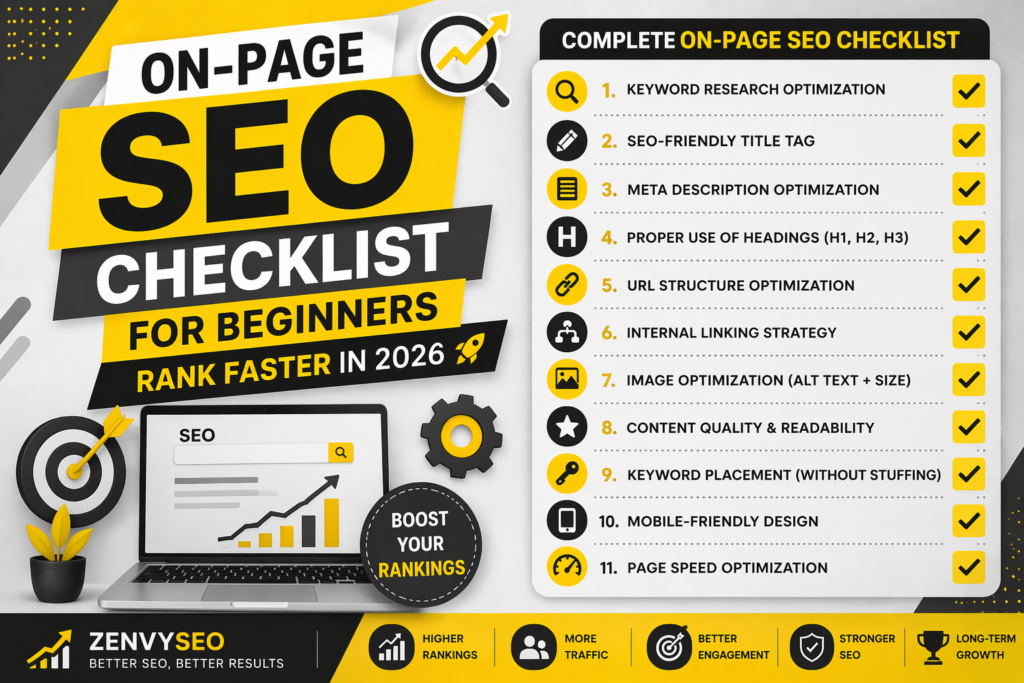
If you want to rank your website on Google, you need more than just writing content. You need a clear on page SEO checklist for beginners that actually works.
In 2026, On-page SEO is not just about keywords. It’s about on page SEO optimization, user experience, and understanding Google ranking signals. This guide will help you follow a practical on page SEO guide that improves visibility and drives traffic. Whether you run a blog or a business website like ZenvySEO, this checklist will help you build a strong SEO foundation.
What is On-Page SEO?
On-page SEO refers to optimizing individual web pages so they rank higher in search engines. It includes content, structure, HTML elements, and overall website optimization.
It is one of the most important parts of search engine optimization techniques because it directly controls how your content is presented to both users and search engines. A well-optimized page increases engagement and improves ranking chances.
Simple Definition for Beginners
On-page SEO means improving your content and page elements to make them search engine friendly. This includes headings, keywords, images, and internal links. It focuses on keyword optimization and making content easy to read. Beginners should start with simple structure and clear content.
Why On-Page SEO Matters in 2026
Search engines are smarter now. They focus on search intent optimization and user behavior instead of just keywords. If your content does not match user intent, it will not rank. Understanding SEO ranking factors helps you stay ahead of competitors.
- What is On-Page SEO?
- Complete On-Page SEO Checklist
- 1. Keyword Research Optimization
- 2. SEO-Friendly Title Tag
- 3. Meta Description Optimization
- 4. Proper Use of Headings (H1, H2, H3)
- 5. URL Structure Optimization
- 6. Internal Linking Strategy
- 7. Image Optimization (Alt Text + Size)
- 8. Content Quality & Readability
- 9. Keyword Placement (Without Stuffing)
- 10. Mobile-Friendly Design
- 11. Page Speed Optimization
- Comparison Table: Good vs Bad On-Page SEO
- Common On-Page SEO Mistakes to Avoid
- Bonus Tips to Rank Faster in 2026
- Final Thoughts
- Frequently Asked Questions (FAQs)
Complete On-Page SEO Checklist
This is a complete on page SEO checklist for beginners step by step that you can follow to improve your rankings. Each step below is part of proven SEO best practices and helps in better content optimization strategies. Apply these consistently for long-term results.
1. Keyword Research Optimization
Keyword research helps you find what users are searching for. It is the base of every SEO strategy. Use long-tail keywords like how to do on page SEO step by step for better ranking. This improves your targeting and traffic quality.
Must read this keyword-research-for-beginners
2. SEO-Friendly Title Tag
Your title tag is the first thing users see. It should include your primary keyword. A strong title improves click-through rate and supports search engine optimization techniques.
3. Meta Description Optimization
Meta descriptions help users understand your page before clicking. Write short and engaging descriptions with natural keywords. This improves visibility and CTR.
4. Proper Use of Headings (H1, H2, H3)
Headings organize your content and improve readability. Use one H1 and multiple H2 and H3 tags. This helps both users and search engines understand your content better.
5. URL Structure Optimization
A clean URL is easier to read and rank. Keep it short and keyword-focused. Avoid unnecessary numbers or symbols. This is part of strong technical SEO basics.
6. Internal Linking Strategy
Internal links connect your pages and guide users through your site. They improve navigation and boost user experience SEO. You can also link relevant pages from your site like ZenvySEO.
7. Image Optimization (Alt Text + Size)
Images should be optimized for speed and SEO. Use alt text with keywords and compress image size. This improves loading time and accessibility.
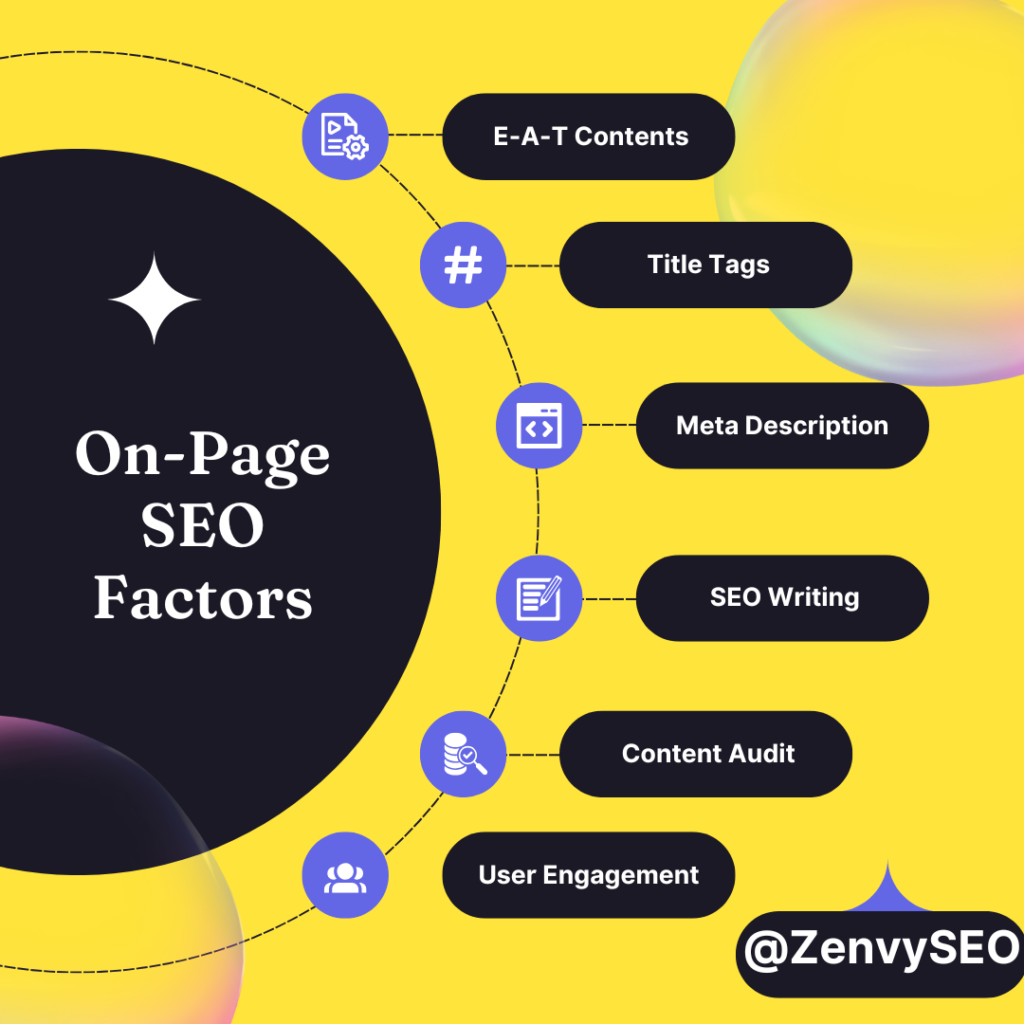
8. Content Quality & Readability
High-quality content always performs better. Write clear and useful information. Use short sentences and simple words. Follow SEO content writing tips to improve engagement.
9. Keyword Placement (Without Stuffing)
Place keywords naturally in your content. Avoid repeating them too much. Use them in headings, intro, and conclusion. This supports search intent optimization.
10. Mobile-Friendly Design
Most users browse on mobile devices. Your website must be responsive. Mobile optimization is a key part of Google ranking signals.
11. Page Speed Optimization
A fast website keeps users engaged. Slow pages increase bounce rate. Optimize images, use caching, and reduce scripts. This helps improve Google ranking fast.
Comparison Table: Good vs Bad On-Page SEO
| Factor | Good SEO Practice | Bad SEO Practice |
| Keywords | Natural use | Keyword stuffing |
| Content | Useful & original | Copied or thin |
| URL | Short & clean | Long & messy |
| Images | Optimized | Large & slow |
| Speed | Fast loading | Slow website |
Common On-Page SEO Mistakes to Avoid
Avoiding mistakes is just as important as applying SEO techniques. Many beginners follow an on page SEO checklist for beginners but still fail because they ignore small but critical details.
Most SEO problems come from poor structure, weak keyword optimization, and lack of understanding of SEO ranking factors. If you fix these mistakes early, your website optimization becomes much stronger and more effective.
Must read this how-to-write-an-seo-optimized-blog-post-that-ranks
Keyword Stuffing
Using too many keywords in your content makes it look unnatural and spammy. Search engines today are smart enough to detect over-optimization and may penalize your page.
Instead of repeating the same keyword again and again, focus on variations and related terms. Use natural language and include LSI keywords to support your main topic. A better approach is to write for humans first and then refine for SEO. This improves both readability and user experience SEO, which is a major ranking factor.
Ignoring Meta Tags
Meta tags play a key role in how your page appears in search results. Ignoring them means losing potential clicks even if your page ranks well.
Your title tag should include your main keyword and be compelling enough to attract attention. The meta description should clearly explain what the user will get after clicking. Optimized meta tags improve click-through rate (CTR) and support search engine optimization techniques. Always treat them as part of your content strategy, not an afterthought.
Duplicate Content Issues
Duplicate content confuses search engines and reduces your chances of ranking. If multiple pages have the same content, Google may not know which one to rank. Always create original and valuable content that provides unique insights. Avoid copying from other websites or even repeating your own content across pages. Using canonical tags and proper structure helps prevent duplication issues. This is an essential part of technical SEO basics and long-term SEO success.
Bonus Tips to Rank Faster in 2026
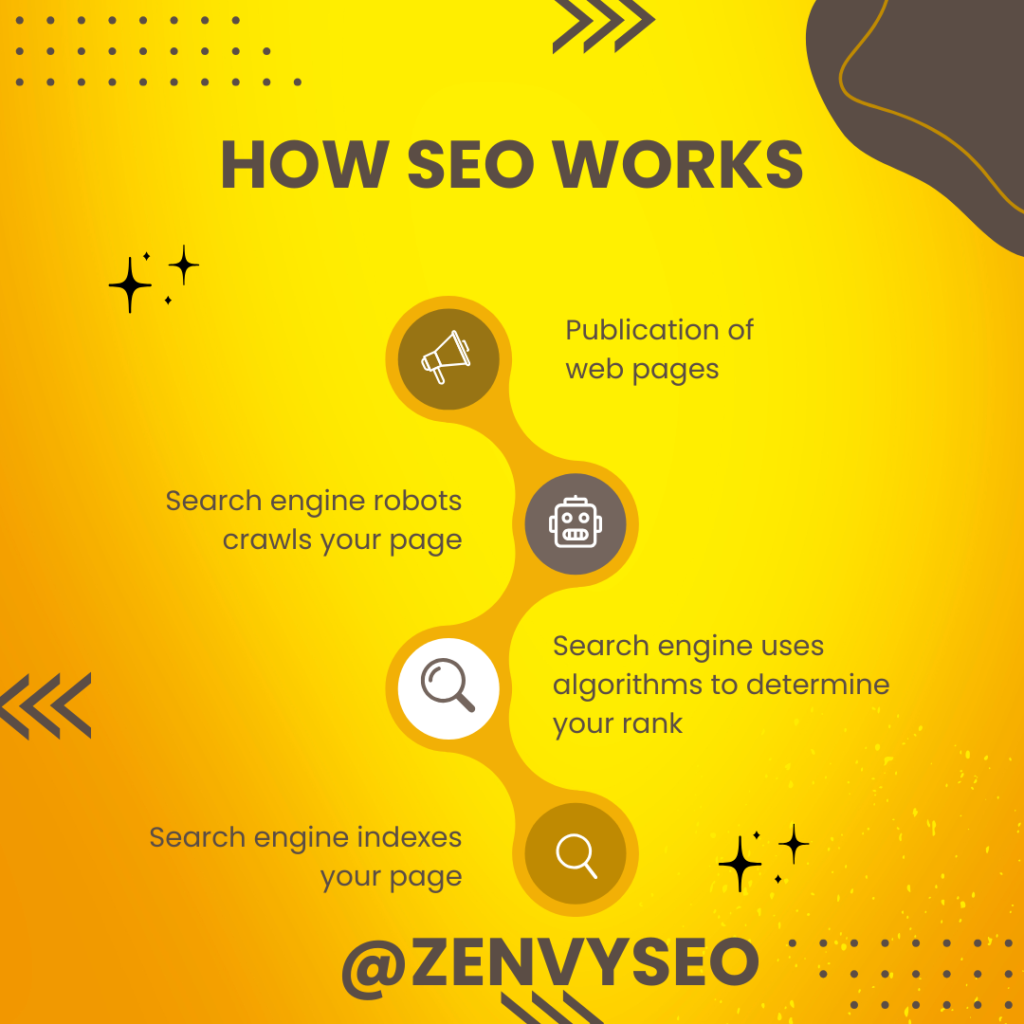
If you want to go beyond the basics, you need to apply smarter strategies. Following a simple on page SEO guide is good, but combining it with advanced tactics gives faster results. Modern SEO focuses heavily on search intent optimization, content quality, and user behavior. These tips will help you improve your rankings and stay ahead in the SEO checklist 2026.
Use AI Tools Smartly
AI tools can help you generate ideas, outlines, and even drafts quickly. But relying completely on AI can make your content feel robotic and generic. Always edit and refine AI-generated content to match your voice. Add real examples, human insights, and clarity to improve quality. Platforms like ZenvySEO can benefit from AI-assisted workflows, but human creativity is still essential for strong content optimization strategies.
Focus on User Intent
Understanding what the user actually wants is the key to ranking higher. It is not just about keywords, but about solving real problems. Before writing, ask yourself: what is the user searching for? Informational, transactional, or navigational intent? When your content matches intent, it improves engagement and sends strong Google ranking signals. This is one of the most powerful SEO best practices today.
Update Content Regularly
SEO is not a one-time task. Search trends change, and your content must stay updated to remain relevant. Update old blog posts with new data, better keywords, and improved structure. This helps maintain rankings and even boosts them over time. Regular updates also signal freshness to search engines, which is important for SEO for blog posts and long-term growth.
Final Thoughts
This complete on page SEO checklist for blog is a simple and practical guide for beginners who want to improve their website step by step. Instead of only chasing rankings, it is important to focus on creating useful content, maintaining a clear structure, and understanding what your audience actually needs. When your content matches user intent and follows basic SEO principles, it becomes easier for search engines to trust and rank your pages. SEO takes time, so you should not expect instant results.
By following this SEO checklist 2026, you can slowly improve your website performance and visibility. Keep your content updated, apply new strategies, and stay consistent. Over time, these small efforts will help you achieve better rankings and steady growth.
Learn the best on page SEO checklist for beginners to optimize your website, improve rankings, and grow traffic in 2026 with simple steps.
Frequently Asked Questions (FAQs)
What is on-page SEO?
It is the process of optimizing individual web pages to rank higher in search engines.
How to do on-page SEO step by step?
Start with keyword research, then optimize content, headings, and technical elements.
How to optimize a blog post for SEO in 2026?
Focus on user intent, content quality, and fast loading pages.
What are the best on page SEO techniques for beginners?
Use proper headings, keyword placement, and internal linking.
How to rank blog on Google fast using SEO?
Follow SEO best practices and consistently update your content.
must read this zenvyseo-on-page-seo-optimization-services
https://www.woorank.com/en/blog/on-page-seo-checklist