
Introduction to Website Creation
What is a Website?
A website is a collection of web pages available on the internet. It allows individuals and businesses to share information, sell products, or build an online presence.
Many people search “how to create website for beginners” or “how to make a website step by step” when starting online. A website acts as your digital identity and helps you reach a global audience. Today, anyone can build a website online without coding skills. With the right tools, you can easily create website from scratch and manage it yourself. At ZenvySEO, we guide beginners to create professional websites easily.
Why You Need a Website
A website is important for visibility and credibility. It helps you connect with users and grow your brand online. If you are wondering “how to start a website for beginners”, understanding its importance is the first step. Websites help you promote services, share content, and build authority. A well-optimized website also helps in optimize website for search engines and increases traffic over time. It is a key part of website development basics and digital growth.
Must read this how-to-do-seo-step-by-step-for-beginners/
What You Need to Create a Website
Domain Name Explained
A domain name is your website address on the internet. It is what users type to access your website. You need proper domain name registration to secure your brand name. A good domain builds trust and improves recognition. Always choose a domain that is simple, relevant, and easy to remember. This helps users find your site easily. It is the first step in your create website setup guide.
Web Hosting Basics
Web hosting is a service that stores your website files and makes them accessible online. Without hosting, your website cannot be seen. Choosing the right web hosting for beginners is very important. It affects speed, uptime, and overall performance. A reliable hosting provider ensures your site stays online and loads quickly. This improves user experience and SEO. Always compare options before selecting the best hosting for new website.
Website Builder or CMS
A CMS (Content Management System) helps you create and manage your website easily. WordPress is the most popular option. Many beginners search “how to create website without coding” because they want simple solutions. CMS platforms make it possible. You can also use website builder tools that offer drag-and-drop features. These are beginner-friendly and quick to use. Choosing the right platform is important for long-term success.
Types of Websites
Blog Website
A blog website is used to publish articles and share knowledge. It is perfect for beginners and content creators. It helps you improve your website content writing skills and build authority in your niche. Blogs can also generate income through ads and affiliate marketing. They are a great starting point for learning SEO and content strategy.
Business Website
A business website promotes products or services online. It builds trust and helps attract customers. It is essential for branding and online presence. Businesses use websites to provide information and generate leads. A well-designed business site improves conversions and customer engagement.
E-commerce Website
E-commerce websites allow you to sell products online. They include product pages, payment gateways, and shopping carts. These websites require more setup but offer great earning potential. You can build an online store using platforms like Shopify or WordPress.
Portfolio Website
A portfolio website showcases your work and skills. It is useful for freelancers, designers, and developers. It helps you attract clients and show your expertise. A clean and professional portfolio builds trust and credibility.

Step-by-Step Guide to Create a Website
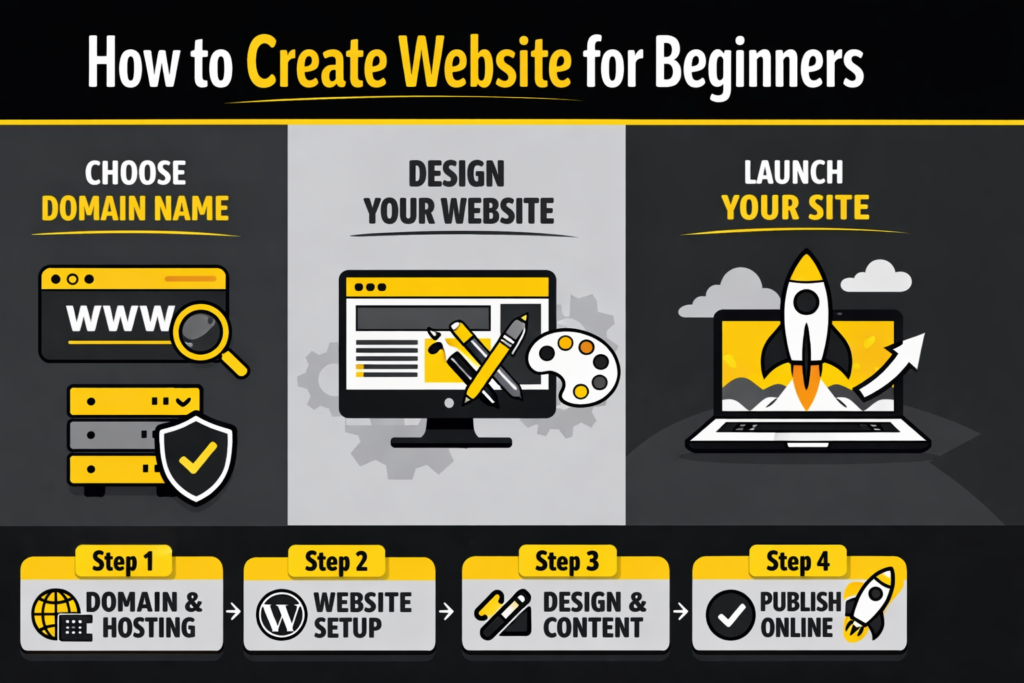
Step 1: Choose a Domain Name
Choosing a domain name is the first and most important step. It represents your brand online. A good domain builds trust and makes your website easy to remember. Many beginners who search “how to create website for beginners” often ignore this step. But a strong domain name improves branding and SEO.
Keep it Short and Simple
A short domain is easy to type and remember. Long and complex names confuse users. Always aim for clarity and simplicity.
Use Keywords in Domain
Adding keywords can help in SEO. For example, if your niche is SEO, include relevant words naturally. This supports your website setup guide and improves visibility.
Avoid Numbers and Symbols
Numbers and symbols create confusion. Users may forget or mistype them. Always use clean and readable names.
Step 2: Buy Web Hosting
Web hosting is where your website lives. Without hosting, your website cannot be accessed online. Choosing the right hosting is very important for performance and growth. It directly affects your fast loading website and user experience.
Shared vs VPS Hosting
Shared hosting is cheap and beginner-friendly. VPS hosting is more powerful and suitable for growing websites.
Uptime and Speed
Always choose hosting with high uptime (99.9%). Speed is critical for website speed optimization and SEO.
Customer Support
Good support helps solve issues quickly. Beginners should always choose hosting with 24/7 support. Choose wisely because it impacts your website performance tips.
Step 3: Install Website Platform
Installing a platform is the next step. Most beginners choose WordPress because it is easy and flexible. If you are searching “how to create a website on wordpress step by step”, this is where it starts.
One-Click WordPress Install
Most hosting providers offer one-click installation. It is quick and beginner-friendly.
Manual Installation
Manual setup gives more control but requires technical knowledge.
Setup Basic Settings
After installation, set your site title, permalink structure, and install basic plugins. This completes your wordpress website setup and prepares your site for content.
Step 5: Customize Your Website
Customization makes your website unique and professional. It reflects your brand identity.
Logo and Branding
A logo builds trust. Use consistent branding across your site.
Colors and Fonts
Choose simple and readable fonts. Stick to 2–3 colors for a clean look.
Homepage Setup
Your homepage is the first impression. Keep it clear, simple, and informative. Follow a proper wordpress customization guide to improve design quality.
Step 6: Add Content
Content is the backbone of your website. Without content, your website has no value. If you want to create website from scratch, content is what makes it useful.
Create Important Pages
Start with essential pages like Home, About, Contact, and Services.
Write SEO-Friendly Content
Focus on solving user problems. Use proper keywords and structure. This improves seo for new website.
Add Images and Media
Use images to improve engagement. Optimize them for speed and SEO. Good content helps in optimize website for search engines and increases traffic.
Step 7: Publish Your Website
Publishing makes your website live. It becomes accessible to users worldwide. Many people search “how to launch a website step by step” at this stage. Before publishing, check everything carefully. After launch, start promoting your website.
- Introduction to Website Creation
- What You Need to Create a Website
- Step-by-Step Guide to Create a Website
- Choosing the Right Platform
- Designing Your Website
- Launching Your Website
- Common Mistakes to Avoid
- 🛠️ Popular Website Builders Comparison
- Conclusion
- Frequently Asked Questions (FAQs)
Choosing the Right Platform
WordPress vs Other Platforms
WordPress is flexible and powerful. It offers thousands of themes and plugins. Other platforms are easier but less customizable. WordPress is best for long-term growth.
Website Builders vs Coding
Website builders are simple and fast. They require no coding skills. Coding gives full control but needs technical knowledge. Beginners should start with builders or CMS.
Free vs Paid Platforms
Free platforms are limited. Paid platforms offer more features. For professional websites, paid options are better. Choose based on your goals and budget.
Designing Your Website
Choosing a Clean Layout
A clean layout improves readability and user experience. Focus on simple and organized website layout design. Avoid clutter and keep sections clear.
User-Friendly Navigation
Navigation should be easy and simple. Users should find information quickly. A strong website navigation structure improves usability. Use clear menus and logical categories.
Mobile Responsive Design
Your website must work on all devices. Mobile users are increasing daily. A mobile friendly website design improves SEO and engagement. Always test your site on mobile before launching.
Launching Your Website
Final Testing Checklist
Before launch, test your website completely. Check speed, links, and design. Use website testing tools to ensure everything works perfectly.
SEO Basics Before Launch
Title Tags and Meta Descriptions
Add optimized titles and descriptions for each page.
URL Optimization
Keep URLs short and keyword-friendly.
Sitemap Submission
Submit sitemap to Google for indexing. This helps in website indexing on google.
Submit Website to Google
Use Google Search Console to submit your website. It helps search engines find and rank your site. This step is important for visibility.
Common Mistakes to Avoid
Choosing Wrong Hosting
Poor hosting affects speed and uptime. Always choose reliable hosting for better performance.
Ignoring Mobile Optimization
A mobile friendly website is essential today. Most users access websites through mobile devices.
Poor Website Design
Bad design reduces user engagement. Follow user experience design basics for better results.
Final Tips for Website Success
Keep Updating Content
Regular updates keep your website fresh and relevant. It helps improve rankings and user engagement.
Improve Website Speed
Image Compression
Optimize images to reduce size.
Use Caching
Caching improves loading time.
Fast Hosting
Choose fast hosting for better performance. Follow proper website speed optimization practices.
Focus on User Experience
User experience is key to success. A good design keeps visitors engaged. It also improves SEO and conversions.
🛠️ Popular Website Builders Comparison
| Platform | Ease of Use | Pricing | Features | Best For |
|---|---|---|---|---|
| Wix | Very Easy | Free + Paid | Drag & Drop, Templates | Beginners, small sites |
| WordPress | Medium | Free + Hosting | Plugins, Customization | Blogs, scalable websites |
| Shopify | Easy | Paid ($29/mo+) | E-commerce tools | Online stores |
| Squarespace | Easy | Paid | Design-focused | Portfolio, creatives |
Conclusion
Creating a website is simple if you follow the right steps. If you are searching “how to build a website from scratch” or “how to create professional website easily”, this guide gives you everything. At ZenvySEO, we recommend starting small and staying consistent.
Learn how to create website for beginners step by step. Build a website without coding, choose hosting, design pages, and launch easily. ZenvySEO guide.
Frequently Asked Questions (FAQs)
How to create website for beginners?
Start with domain, hosting, and WordPress.
Can I create website without coding?
Yes, use CMS or website builders.
How much does it cost?
It depends on hosting and tools.
How long does it take?
You can build a basic site in 1–2 days.
Which platform is best?
WordPress is best for beginners.
https://www.wix.com/blog/how-to-build-website-from-scratch-guide